by VelocityTX | Jun 15, 2026 | Press Releases
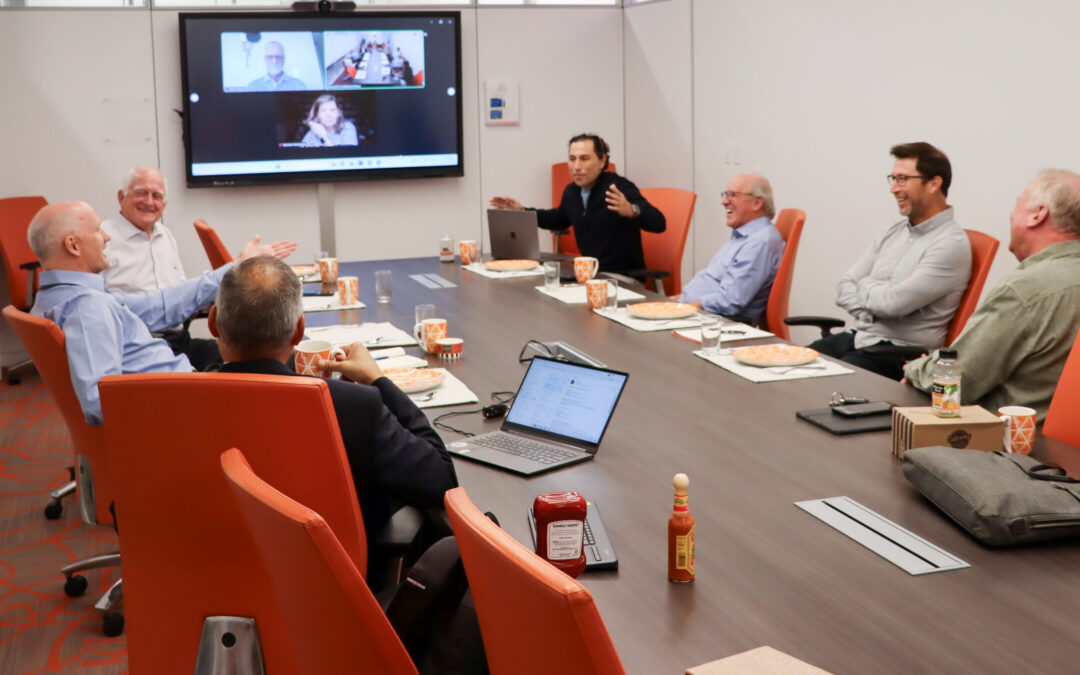
SAN ANTONIO (June 15) — Each month, some of San Antonio’s leading bioscience CEOs gather—not to pitch investors or announce breakthroughs, but to solve the real challenges of building companies. Behind closed doors, these peer-driven discussions are helping accelerate growth across one of the nation’s fastest-emerging medical innovation hubs. Given the participants’ medical mission, one might expect these meetings to take place at the South Texas Medical Center.
Instead, they are held in a somewhat unexpected setting: San Antonio’s near east side, where the city’s growing medical and bioscience ecosystem is helping fuel a broader renaissance, with economic development agency VelocityTX leading the charge.
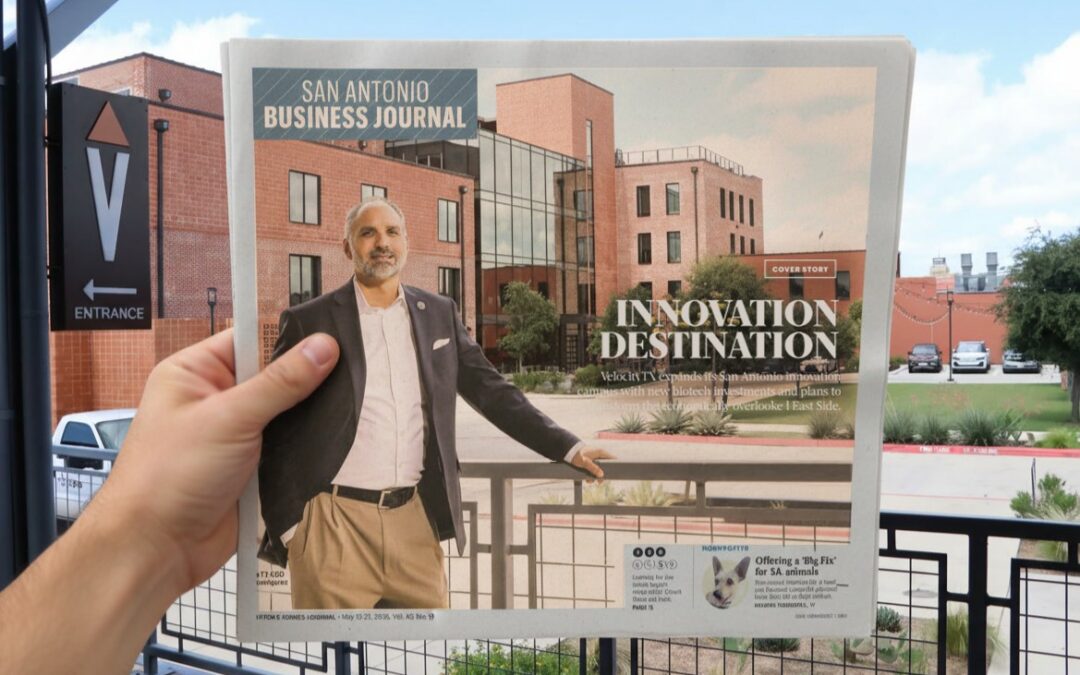
From its state-of-the-art Innovation Center at the newly redeveloped Merchants Ice campus, VelocityTX seeks to leverage San Antonio’s bioscience industry to promote sustainable economic growth—and the CEO Roundtable program is just one of the ways it is helping drive that momentum.
Launched in 2021, CEO Roundtable brings together founders and chief executives from some of San Antonio’s most promising bioscience companies in an intimate setting where participants engage in candid, peer-driven discussions designed to address real-time leadership challenges while fostering deeper collaboration across the ecosystem.
The program is led by VelocityTX Chief Innovation Officer Jeremy Nelson, PhD and local medtech entrepreneur Dr. Gabriele Niederauer. Nelson, who joined VelocityTX in December, brings more than 20 years of experience aligning scientific discovery with operational needs across the Department of Defense, academia, and industry. As Chief Innovation Officer, he leads innovation strategy, strengthens defense and federal partnerships, and expands pathways to commercialization, helping position San Antonio as a national hub for military medicine and bioscience innovation.
Dr. Niederauer, recently appointed VelocityTX Entrepreneur-in-Residence, is also the CEO & Co-Founder of Freyya, a women’s health medtech company developing a novel, data-driven solution for pelvic floor rehabilitation. A serial entrepreneur with multiple successful exits, she brings deep expertise in product development, regulatory strategy, and commercialization to founders in the program.
“San Antonio’s bioscience sector is growing not just because of individual company success, but because of a willingness to collaborate,” said Nelson. “These roundtables create a trusted space where leaders can be vulnerable, share lessons learned, and ultimately move faster together.”
Participating companies represent a broad cross-section of the region’s innovation landscape:
Cohort 1
- J4 Biologics (Joe Mims, CEO): J4 Biologics is a San Antonio–based company that processes amniotic membrane allografts for robotic GI and gynecologic surgeries. The company also produces an acellular dermal matrix to support breast reconstruction after mastectomy.
- TheLabCafé.com (J. Randolph Harig, COO): The Lab Café is a Direct-to-consumer Self-Pay online lab testing service that allows individuals to order affordable health and STD tests, visit a certified local testing center, and receive private results in 24 hours without using insurance.
- Orthios Innovations (Keith Peeples, Board Member): Orthios Innovations is a medical device company behind Weight Bear, a hands-free simulated weight-bearing device for foot and ankle surgery and imaging.
- Prytime Medical Devices (David Spencer, CEO): Prytime Medical Devices manufactures a balloon occlusion device designed to temporarily stop internal bleeding and stabilize patients experiencing life-threatening hemorrhage.
- Seno Medical (Tom Umbel), CEO: Seno Medical developed the Imagio® Breast Imaging System, which combines opto-acoustic and ultrasound imaging with AI-based decision support to help assess whether breast masses are benign or malignant.
Cohort 2
- AlexiGen (Jacob Chandler, CEO): AlexiGen manufactures biologic products for many surgical specialties, wound care, and sports medicine, with a focus on unique innovative tissue-based solutions and customer service.
- Biomedical Development Corporation (Gregg Siegel, CEO): Biomedical R&D and GMP manufacturing company with more than 60 NIH SBIR/STTR awards. BDC develops and commercializes patented health and wellness products, including skincare and oral care offerings, and is developing a digital therapeutic for opioid use disorder.
- Gap-Flex (Manuel Torres, CEO): GAP-FLEX is a medical device company focused on improving post-operative knee rehabilitation through a patented, gravity-assisted therapy system designed to restore range of motion efficiently and with high patient compliance. The company is now entering full commercialization following successful reimbursement approval.
- iGenomeDx (Niti Vanee, CEO): iGenomeDx is a CLIA-certified molecular diagnostics laboratory specializing in pharmacogenomics, infectious disease, genetic risk assessment, and toxicology testing, dedicated to enabling faster, more precise clinical decision-making and improved patient outcomes.
- Novothelium (Lauren Cornell, CEO): Novothelium develops donor-derived regenerative nipple-areolar grafts for breast reconstruction after mastectomy.
For many participants, the program stands apart from traditional leadership initiatives.
“I have participated in several leadership groups and the VelocityTX CEO roundtable stands out among the crowd. It has been deeply impactful because it brings scientific strategy and business leadership together in a way most programs don’t,” said Lauren Cornell, CEO of Novothelium. “Combined with a strong, well-rounded cohort, it’s sharpened how I think and operate as a founder.”
As San Antonio continues to invest in its bioscience/medtech ecosystem, initiatives like the CEO Roundtable are helping transform the region from an emerging hub into a nationally recognized center for medical innovation—driven not just by individual success, but by a culture of collaboration.

by VelocityTX | Jun 1, 2026 | Articles
by VelocityTX | May 19, 2026 | Press Releases
Bioscience leaders gather to advance military medicine and dual-use health technologies
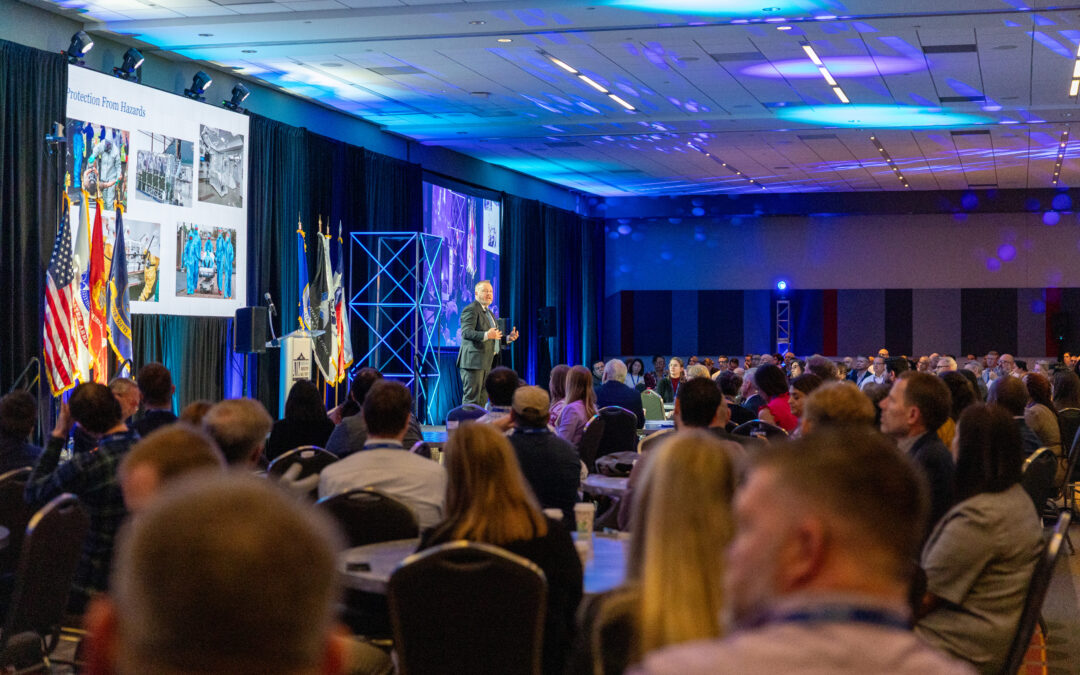
SAN ANTONIO (May 19) — San Antonio’s military medical ecosystem took center stage today as the AIM Health R&D Summit opened at the Henry B. González Convention Center, bringing together researchers, entrepreneurs, investors and military medical leaders to accelerate the development and commercialization of technologies serving both warfighters and civilian patients.
Organized by VelocityTX and UT San Antonio in cooperation with the City of San Antonio and Bexar County, the Summit welcomed Mayor Gina Ortiz Jones and UT San Antonio President Taylor Eighmy for opening remarks.
The full-day program spans trauma and combat casualty care, traumatic brain injury, mental health, infectious disease, regenerative medicine, human performance, artificial intelligence and austere-care technologies. Keynote presentations will be delivered by Dr. Paul Biddinger, Chief Preparedness and Continuity Officer at Mass General Brigham and Dr. David C. Hilmers, former NASA astronaut, retired U.S. Marine Corps colonel and physician.
A signature feature of the event is the Department of War Subject Matter Expert Encounter Sessions, which connect innovators directly with military medical leaders, research organizations and program stakeholders to clarify operational needs, funding pathways and partnership opportunities. The Summit will also feature a Pitch Scrimmage — giving emerging companies a chance to sharpen their commercialization stories before an experienced panel that includes representatives from the Defense Health Agency, Alamo Angels, and VelocityTX.
“San Antonio’s military medical ecosystem is one of our region’s most powerful economic assets,” said Rene Dominguez, President and CEO of VelocityTX. “AIM is where that ecosystem comes together — researchers, entrepreneurs, military medical leaders, investors and civic partners — to turn breakthrough ideas into real-world solutions. By advancing dual-use technologies, we are supporting the warfighter, improving civilian health outcomes and building the next generation of economic opportunity for San Antonio.”
San Antonio’s military medical network includes the Defense Health Agency, the U.S. Army Institute of Surgical Research, Naval Medical Research Unit San Antonio, the 59th Medical Wing, Brooke Army Medical Center, the 711th Human Performance Wing and the Department of Veterans Affairs. In 2025, the Defense Health Agency announced a partnership with VelocityTX to accelerate modernization research and development — reinforcing the city’s position as a national hub for military medical collaboration and commercialization.
“UT San Antonio is proud to stand with VelocityTX, the City of San Antonio and Bexar County in advancing the AIM Health R&D Summit,” said Jennifer Sharpe Potter, Senior Executive Vice President for Research and Innovation of The University of Texas at San Antonio. “This event reflects the power of research universities to connect discovery with public purpose — especially in a city where military medicine, biomedical research, entrepreneurship and civic leadership intersect.”
“The City’s investment in this ecosystem is an investment in jobs, research capacity, entrepreneurship, and better health outcomes,” said Mayor Gina Ortiz Jones. “AIM strengthens the connections that help San Antonio companies grow, moves discoveries from lab to market, and helps deliver new technologies to military and civilian communities faster.”
The 2026 AIM Health R&D Summit builds on San Antonio’s identity as Military City USA and its expanding reputation as a center for bioscience, medical readiness and applied innovation — moving technologies from discovery to deployment, and ultimately from the laboratory to the patient.
About VelocityTX
Formerly known as the Texas Research & Technology Foundation, VelocityTX is a nonprofit organization established in 1984 to promote sustainable economic and community growth. In carrying out this mission, the organization seeks to advance San Antonio’s life sciences industry through the development of a state-of-the-art bioscience innovation campus on the city’s near east side. Based out of the former Merchants Ice & Cold Storage complex, the master planned development will bring together established bioscience companies, healthcare startups, and military medical research organizations in an inclusive community where ideas collide to spur medical breakthroughs. VelocityTX also promotes workforce development through its Step Into STEM program, and provides entrepreneurial support services designed to accelerate the commercialization of emerging medical technologies. Learn more at velocitytx.org.
by W. Scott Bailey | May 15, 2026 | Uncategorized
by 59th Medical Wing Chief Scientist s Office, Science Technology | Apr 10, 2026 | Articles
JOINT BASE SAN ANTONIO-LACKLAND, Texas –
Imagine in a future conflict a medic encountering a wounded warfighter on a battlefield, far forward of any base that could have whole blood. The medic quickly realizes the warrior has lost a lot of blood and will die soon without immediate intervention. They normally would infuse a sterile fluid to increase the volume of blood circulating in the body to ensure the few remaining oxygen carrying red blood cells are distributed, but instead they break the seal of a bag that allows sterile water to rehydrate and reanimate freeze-dried red blood cells, allowing the medic to rapidly infuse additional red blood cells, restoring the flow of oxygen to vital organs, preserving the warriors life.
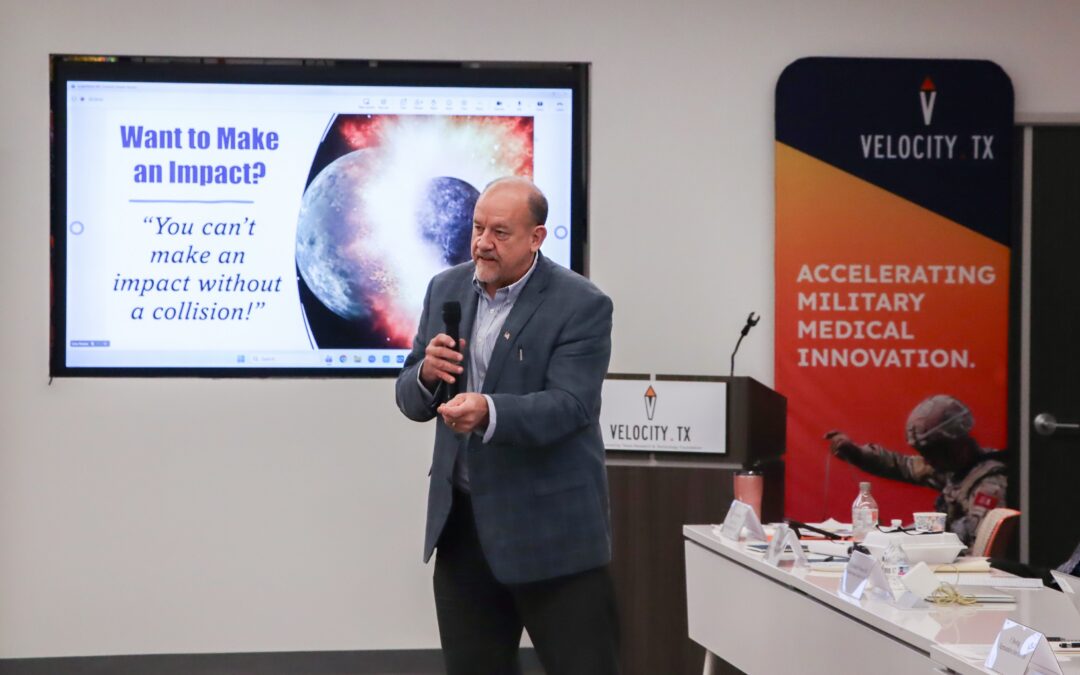
Such a medical capability was discussed in a one day summit held on Wednesday, April 8, 2026, in San Antonio, TX, led from subject matter experts from 59 MDW/ST, USAISR, and NAMRU-SA who were supported by researchers, developers, end users such as SOCOM, Armed Services Blood Bank, Joint Trauma System, as well as several companies and universities who lead R&D efforts that have demonstrated the ability to successfully freeze dry, store at room temperatures, and rapidly reconstitute viable, oxygen carrying red blood cells.
In addition to reviewing the state of the science for freeze-drying red blood cells, this coalition of military, industry, and academic partners also considered the use of a prize competition to incentivize the rapid development and fielding of commercially available products for military use and civilian emergency medical applications. Such applications include ability to maintain, reconstitute, and administer red blood cells into patients living in rural areas that cannot effectively maintain perishable whole blood products.
The prize-based development model was discussed as a replacement to the incremental research funding model to leverage outside, non-government investments such as venture capitalists and other investors to reduce development costs, time, and risk to the government while rapidly developing a viable, affordable commercial-available product.
“Researchers have already demonstrated they can effectively freeze dry red and reconstitute viable red blood cells,” Scott F. Walter, PhD, Director of Technology Transition/Transfer from the 59th Medical Wing Chief Scientist’s Office, Science and Technology (59 MDW/ST) reported, “and a prize competition is the perfect vehicle to incentivize academia and industry to optimize their ability to freeze dry processes and transition from the laboratory to manufacturing and into medics hands or rucksacks for use at the point to injury, whenever needed.”
Participants focused on two issues. First, whether red blood cells can be reliably freeze-dried and later reconstituted to full function, including oxygen delivery, after extended storage without refrigeration. Second, whether government-funded prize competitions can speed development by attracting teams from across sectors and tying awards to measurable results. The meeting drew support from military organizations responsible for blood supply and distribution, as well as research groups working on advanced blood products to improve survival in combat care.
Henry M. Jackson Foundation for the Advancement of Military Medicine, Inc., supported the event by collecting the information proceedings to assist the government in producing a formal report. VelocityTX, a San Antonio-based nonprofit innovation hub and bioscience campus, hosted the summit.
Current blood products require cold storage and have short shelf lives. That limits their use in remote or austere environments. A freeze-dried product with a shelf life of two to three years would reduce reliance on refrigeration and allow medics to treat severe blood loss sooner.
Organizers said a prize competition model could shift development from incremental research to outcome-based milestones. Teams would compete to meet defined technical goals, including stability, safety, and full functional restoration after reconstitution.
The information gathered at the summit will be provided to the Defense Health Agency (DHA) and service medical research and development leadership. It is expected to guide funding decisions, shape a commercial development strategy, and set priorities for future work.
The effort also opened the door to a two-way exchange. Industry and academic teams shared progress and technical limits in freeze-drying red blood cells. Military participants outlined operational needs in far-forward settings, where rapid treatment and minimal logistics are priorities.
If successful, the initiative could expand access to lifesaving blood products for both military personnel and civilian trauma patients, as well as for use in emergencies.
For the military, it would put treatment closer to the moment of injury. Medics could carry a stable product that does not require refrigeration. That reduces delays tied to supply chains and cold storage. It also lowers waste from expired units. In far-forward settings, this could mean earlier resuscitation and higher survival rates.
For civilian care, the impact extends to ambulances, rural clinics, and disaster response. Many of these settings lack reliable cold storage or immediate access to blood banks. A shelf-stable product could be stocked in emergency vehicles and small facilities, enabling providers to treat severe blood loss sooner. In mass casualty events, it would support rapid distribution without the limits of refrigerated transport.